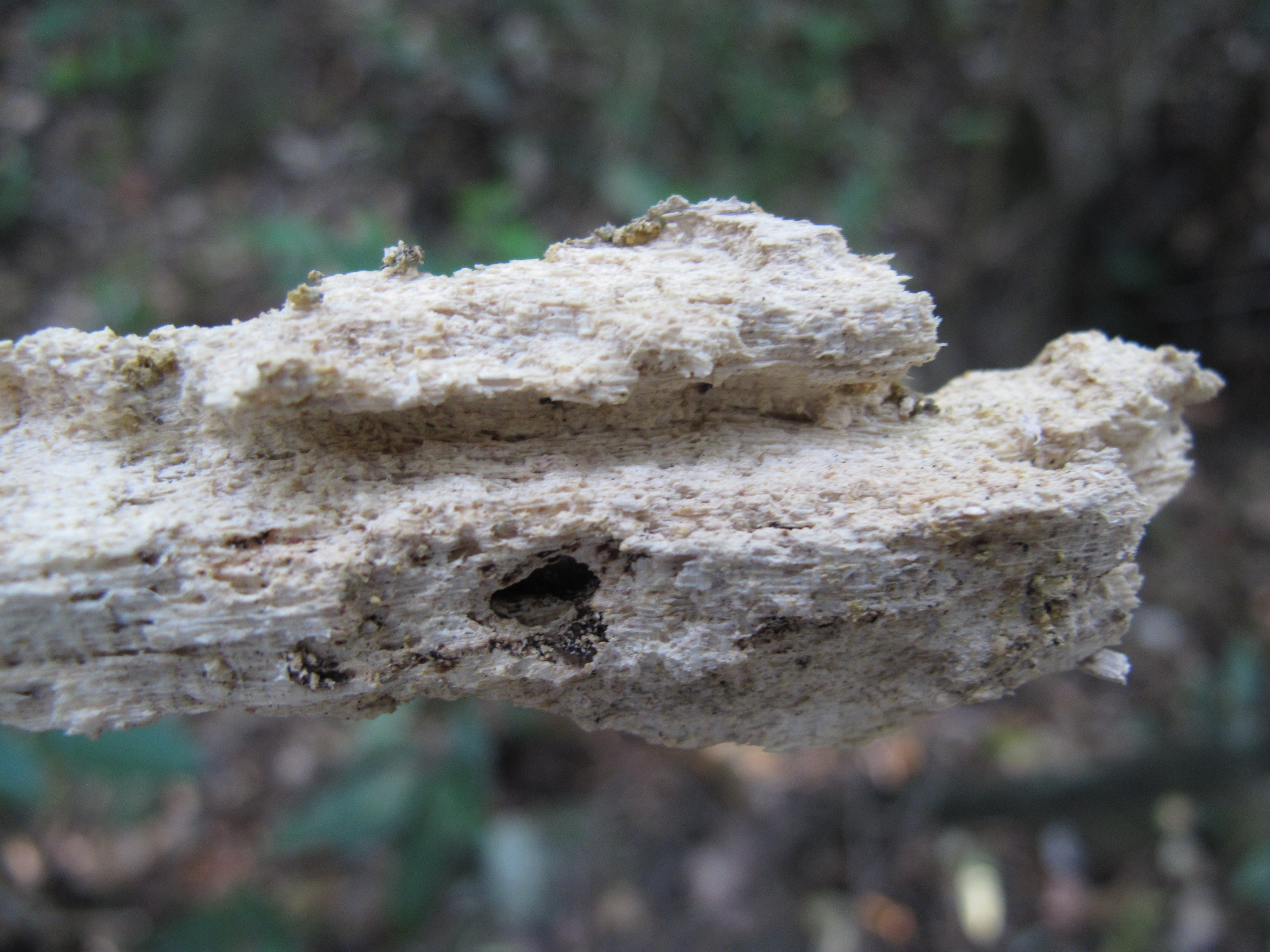
Wood decay fungi are the decomposer on ecosystem by converting woods to water and carbon dioxide. It helps to breakdown complex molecules and return nutrients to the soil. There are 3 kinds of decay fungi based on their decompose strategy: brown rot, soft rot and white rot. Brown rot attacks deadwood. Soft rot break down cellulose in the wood while white rot break down lignin. Different fungi have different influence on the structure of trees (Dunster et al, 2013).
In Hong Kong the most concerned fungal decay is probably Phellinus noxius. More than 9 tree species are confirmed to be hosts of Phellinus noxius. These species include Aleurities moluccana, Bombax ceiba, Celtis sinensis, Delonix regia, Ficus microparpa, Ficus benjamina, Gleditsia fera, Lophostemon confertus and Mangifera indica (GLTMS, 2012). These mentioned species can be commonly found in both urban and rural areas. Phellinus noxius is a white rot fungi mainly affect root system including the root collar that cause brown root rot disease. It is also regarded as ‘tree cancer’ by local authorities (GLTMS, 2017). Brown root rot disease may occur on tree of all age groups and aggravate the health of the host rapidly. (Ann et al, 2002).
Phellinus noxius
In Hong Kong the most concerned fungal decay is probably Phellinus noxius. More than 9 tree species are confirmed to be hosts of Phellinus noxius. These species include Aleurities moluccana, Bombax ceiba, Celtis sinensis, Delonix regia, Ficus microcarpa, Ficus benjamina, Gleditsia fera, Lophostemon confertus and Mangifera indica (GLTMS, 2012). These mentioned species can be commonly found in both urban and rural areas. Phellinus noxius is a white rot fungi mainly affect root system including the root collar that cause brown root rot disease. It is also regarded as ‘tree cancer’ by local authorities (GLTMS, 2017). Brown root rot disease may occur on tree of all age group sand aggravate the health of the host rapidly. (Ann et al, 2002).
The case study on Phellinus noxius was focus on the tree below. It was a Chinese Banyan (Ficus microcarpa), a local species can be commonly found in Hong Kong. It was a mature tree located in urban area, which was a popular spot among local people. The size of both the crown and the root system was greatly confined as it was adjacent to a pathway and a street with heavy traffic nearby.
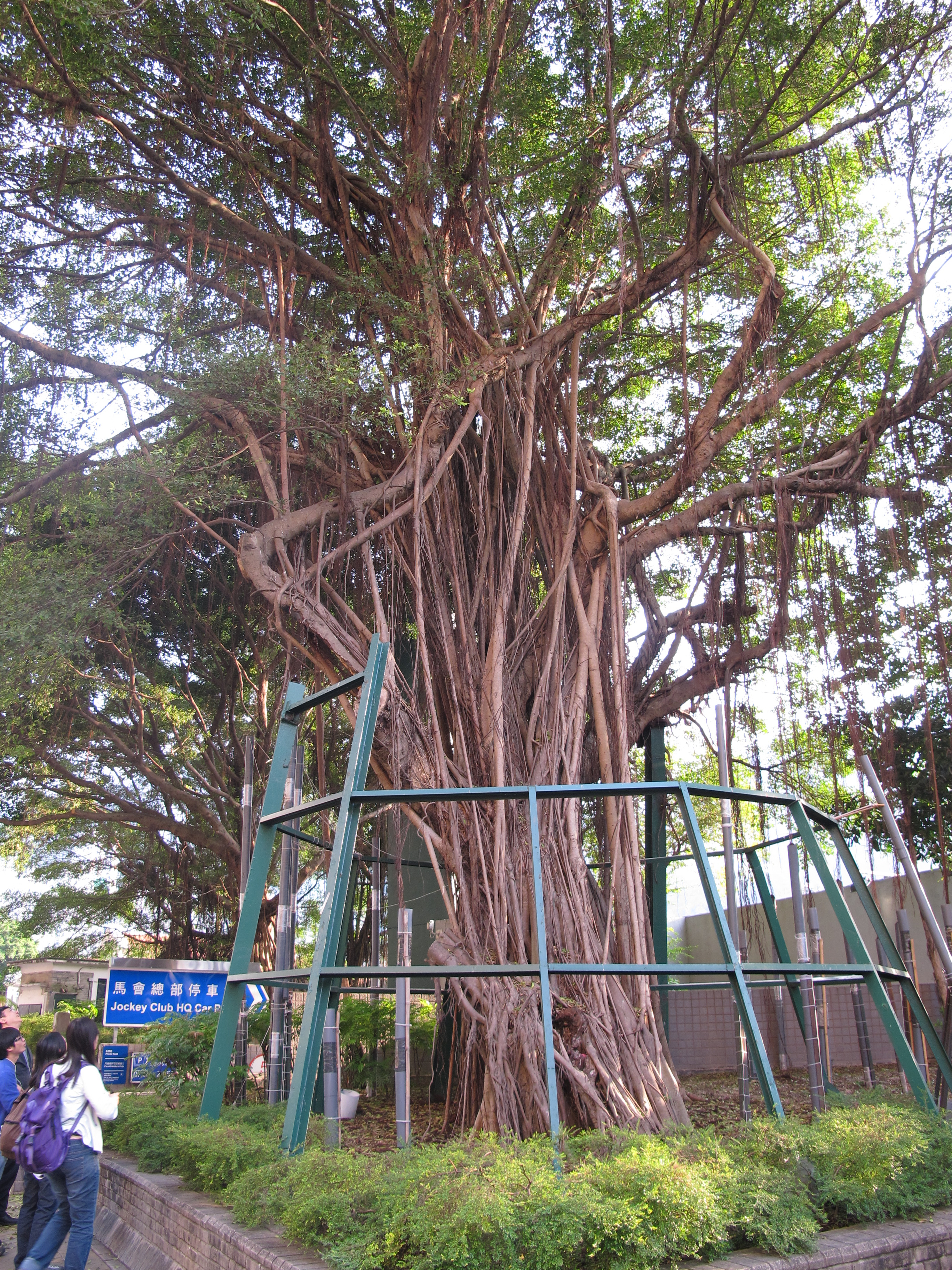
Analysis of the Chinese Banyan
Although the tree had no signs of hydraulic failure, the leaves of the tree were slightly smaller than normal size and the foliage density is sparser than normal. Die back twigs were found on the crown. Further assessment focused on the root collar. Typical signs of brown rot root diseases were found:
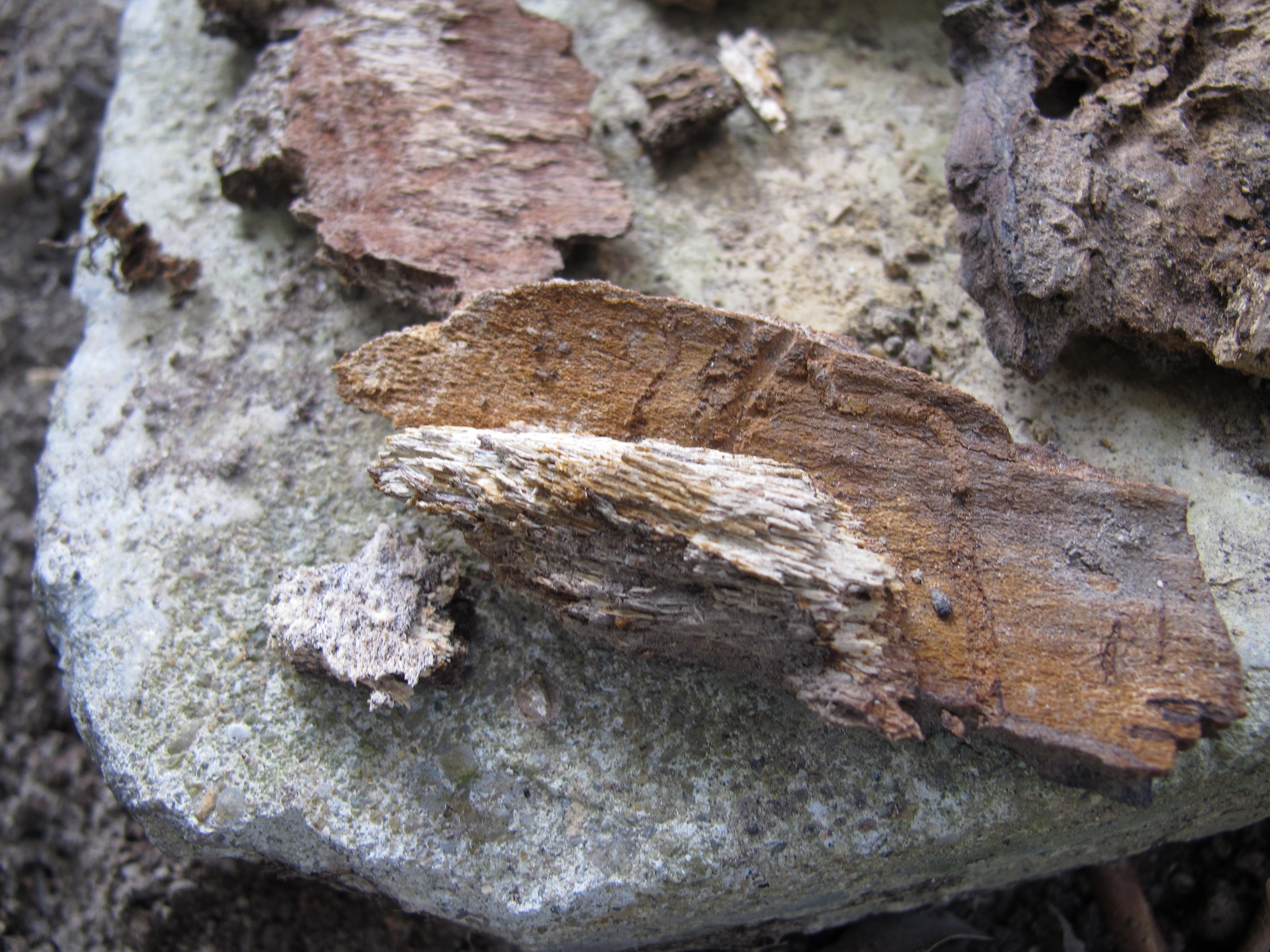
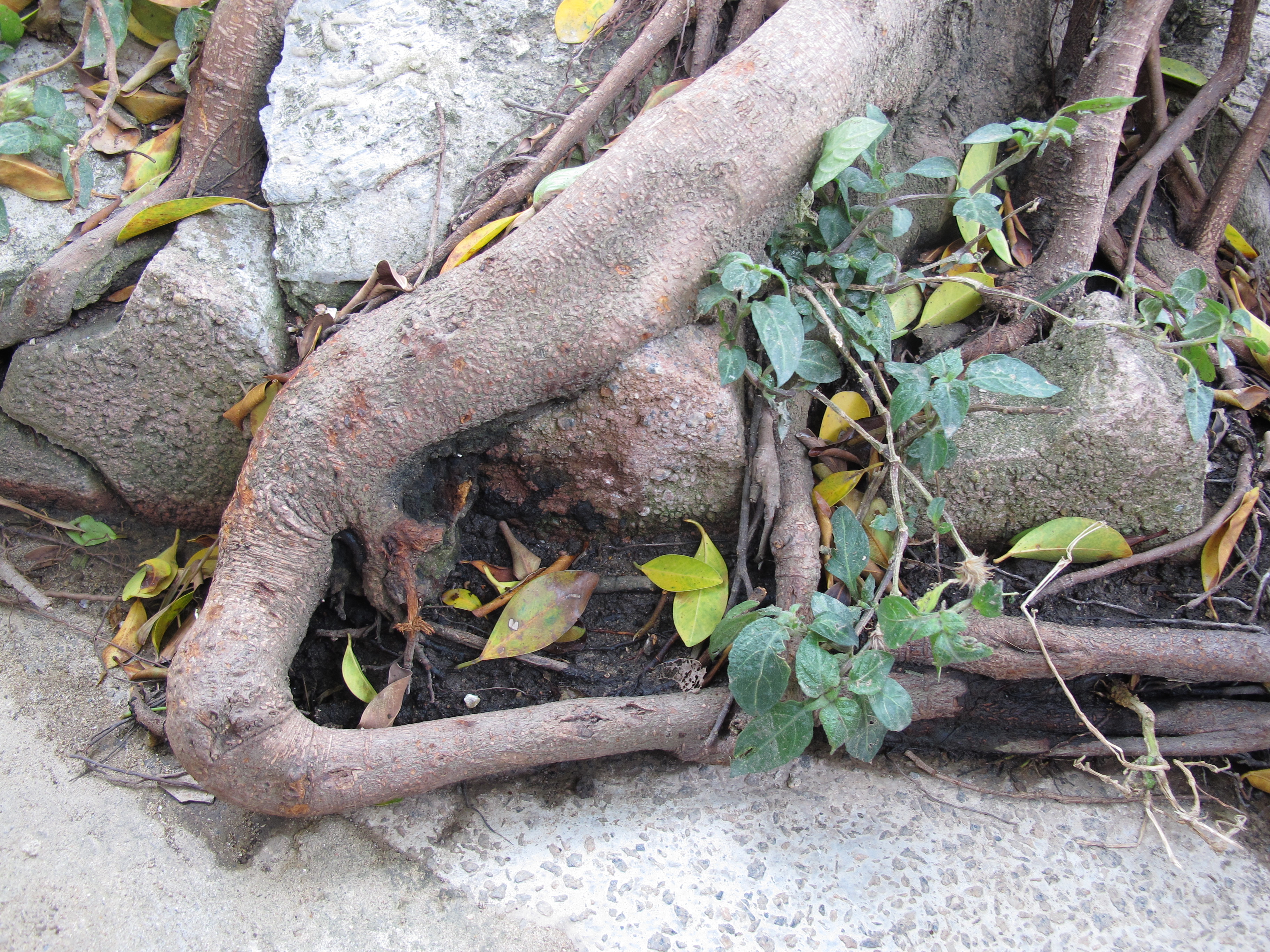
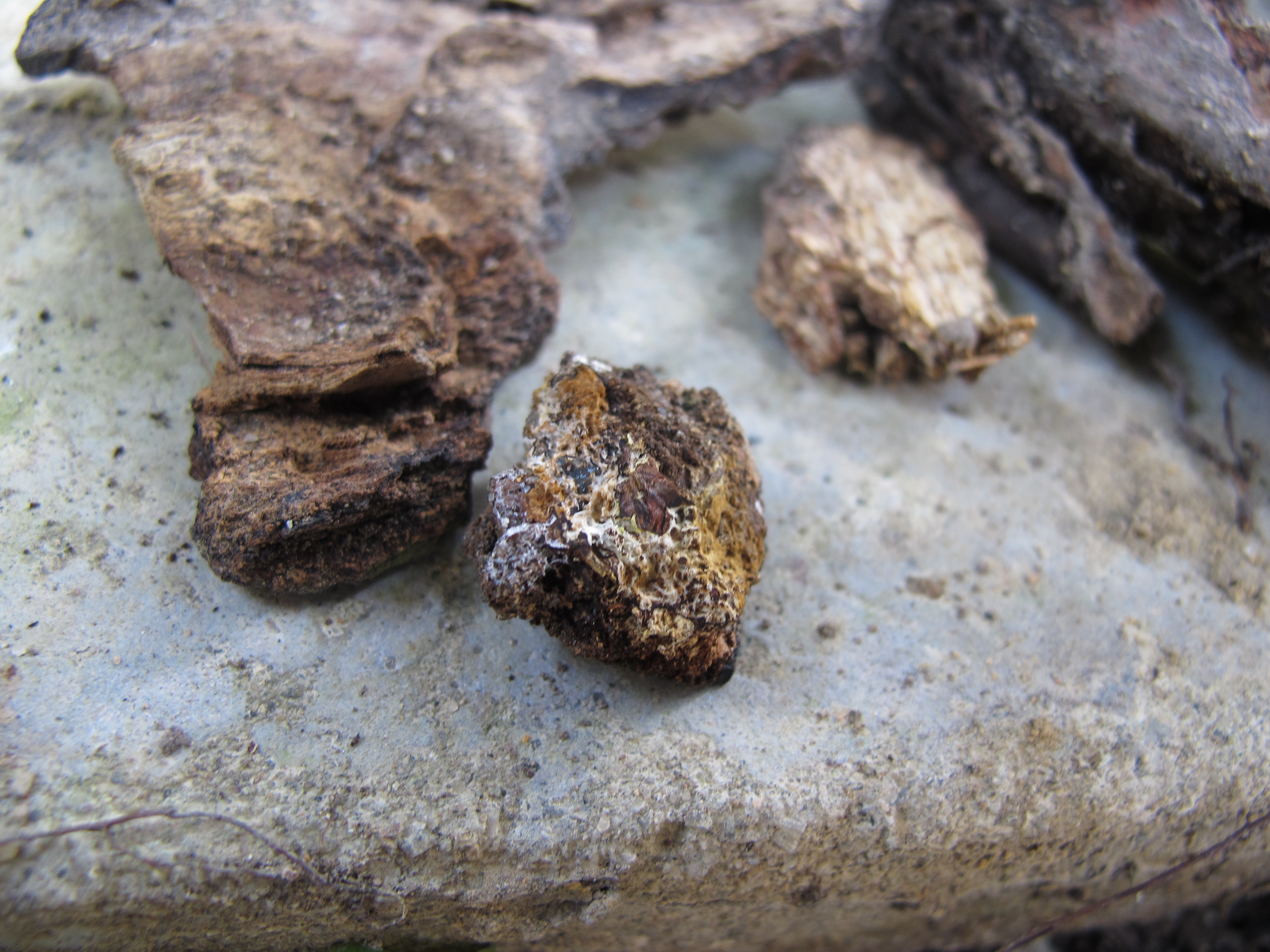
It was confirmed the root system was colonised by Phellinus noxius. Usually a confirmed Brown root rot case requires removal and proper disposal of diseased parts, including woody stumps, fruiting bodies and any debris left behind. Subsequent removal or sanitation of the soil medium is also compulsory. However for trees which drew strong public sentiment for preservation, preservation measure would still be considered as a local tree management policy. (GLTMS, 2012). Due to the potential structure failure of the Chinese Banyan caused by decay of root system, a strong support rack was installed around the tree. Plastic tubes are also applied on aerial roots to enhance the lignification of supporting wood. The tree pit was isolated to prevent root to root contact.Root to root contact is a popular spreading way of Phellinus noxius (Ann et al, 2002).
I could only assess the tree through visual assessment. It would be preferable to conduct a thoroughly assessment with tree defect detection system like resistograph or tomograph so as to test the structure integrity. Several mechanical wounds were found on branches. However these wounds were insignificant when compared to impacts brought by brown root rot disease.
Fate of the Chinese Banyan
The Chinese Banyan was blown over when super typhoon ‘Mangkhut’ attacked Hong Kong.The tree was removed and disposed in a short time. Further assessment were failed to be made. The extent of decay in the root system remained unknown.
The Chinese Banyan was blown over when super typhoon ‘Mangkhut’ attacked Hong Kong.The tree was removed and disposed in a short time. Further assessment were failed to be made. The extent of decay in the root system remained unknown.
Ganoderma tropicum
Ganoderma tropicum is another much concerned fungus in Hong Kong. One of the reasons is: Ganoderma tropicum is an edible fungus with medicinal uses in Chinese culture (Wikipedia, 2018). Like Phellinus noxius, Ganoderma tropicum is a white rot fungi except it does not pose severe destructive impacts as led by Phellinus noxius. Tree species including Acacia confusa, Delonix regia, Albizia lebbeck, Albizia chinensis, Liquidambar formosana are confirmed to be hosts of Ganoderma tropicum. (GLTMS,2015). All these species are widely distributed in both urban and rural areas. In Hong Kong Ganoderma tropicum can be commonly found on aged, weakened or dying Acacia confusa and Delonix regia. Its fruiting body is either stemless or stalked and is annual. Usually it is firstly noticed at the trunk base or root flare by discovery of white dice-like object. This white dice-like object will gradually develop into flattened conks.
The case study on Ganoderma tropicum was focus on a Taiwan Acacia (Acacia confusa). This tree was a mature tree was found in countryside area.

Analysis of the Taiwan Acacia
The foliage density and colour of the concerned tree were normal, as well as the size its leaves. Tree vigor was considered average. A significant crack of size 86cm was found on a major branch. The crack was probably caused by strong wind, in additional of heavy crown weight.There was no decay or fungus was found inside the crack after visual assessment. A few mechanical wounds were found on branches, probably caused by poor pruning exercises. And again no decay or fungus was found. Further assessment focused on the lower part of the trunk near the root collar. White dice-like object was found. That was a typical fruiting body of Ganoderma tropicum.
A few fruiting bodies of Ganoderma tropicum were also found on the ground and were suspected to be attached on the root flare of the concerned Taiwan Acacia. These fruiting bodies were general smaller in size.
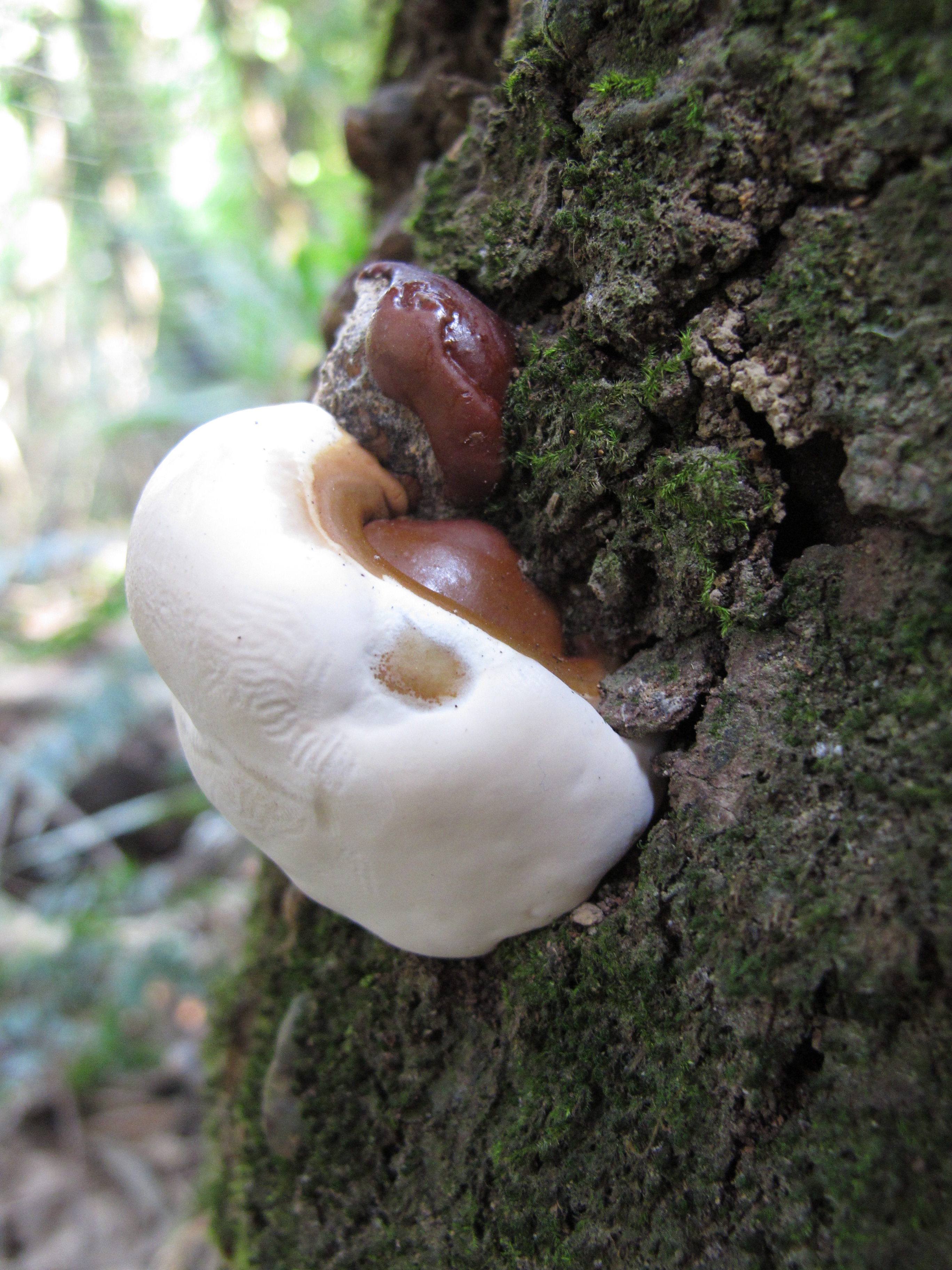
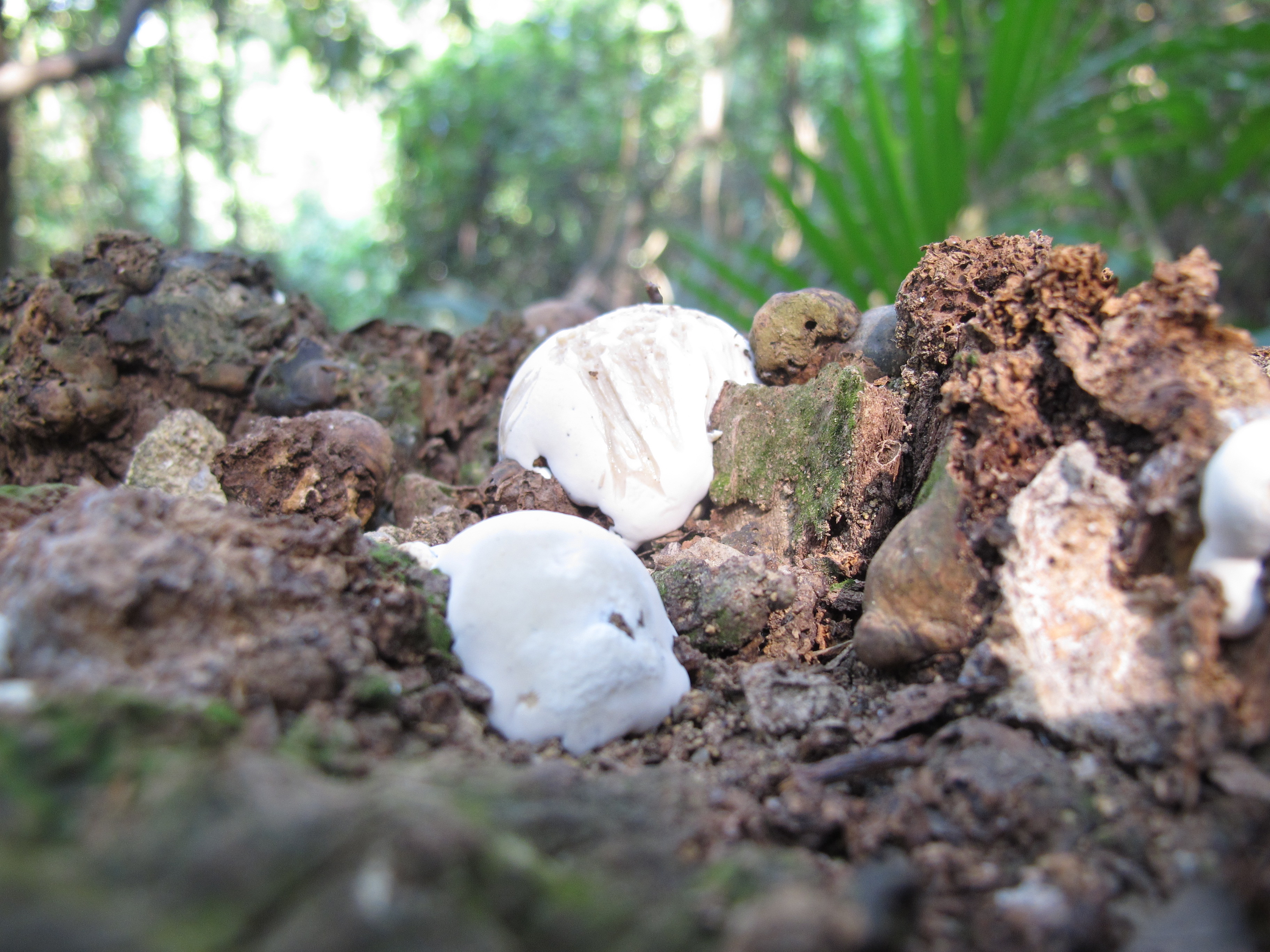

It was confirmed this Taiwan Acacia was colonised by Ganoderma tropicum. A confirmed Ganoderma tropicum invasion case usually indicated decline in structural stability. From the visual tree assessment, the general health condition of the tree was fine. When Ganoderma tropicum was found, visual tree assessment was not enough to determine the structural health of the host. Ganoderma tropicum would decompose lignin. It colonised both sapwood and heartwood in trunks and root system. The conks of Ganoderma tropicum were usually near ground level. However the extend of decay could be up to 4.5 meter, both above and below the conks (Hickman et al, 2011).A thoroughly assessment with tree defect detection systems like resistograph or tomograph would help to assess its structure integrity.
Specified fungicide subjected to the invasion of Ganoderma tropicum can be found on market. However the effectiveness and ramifications of applying such fungicide remains unknown. Further researches in this topic are required. Meanwhile the widely adopted way to deal with Ganoderma tropicum invasion is to remove the fruiting bodies manually.The theory behind is to prevent airborne basidiospores dissemination.
Fate of the Taiwan Acacia
After the attack of super typhoon ‘Mangkhut’, this Taiwan Acacia was re-inspected. The 86cm crack on the trunk was further split to a 95cm one. Apart from that no further damage was found after visual assessment.It was probably due to the well sheltered location where the tree located.
References
Ann, P. J., Chang, T. T. & Ko, W. H., 2002. Phellinus noxius brown root rot of fruit and ornamental trees in Taiwan. Plant Dis. 86, 820–826
Chang, T.T., 1996. Survival of Phellinus noxius in soil and in the roots of dead host Plants. Phytopathology. 86:272-276
Dunster, J. A., Smiley, E. T., Matheny, N. & Lilly, S., 2013. Tree Risk Assessment. Champaign, Illinois: International Society of Arboriculture.
Greening, Landscape and TreeManagement Section (GLTMS), 2012. Guidelines on brown root rot disease.Development Bureau. The Government of the Hong Kong Special AdministrativeRegion. Accessed on 01/12/2018 via:
https://www.greening.gov.hk/filemanager/content/pdf/knowledge_database/Guidelines_on_Brown_Root_Rot_Disease(version_for_the_general_public)EN.pdf
Greening, Landscape and
Tree Management Section (GLTMS), 2015. Note_on_Common_Wood_Decay_Fungi_on_Urban
Trees_of_HK. Accessed on 30/11/2018 via:
https://www.greening.gov.hk/filemanager/content/pdf/tree_care/Note_on_Common_Wood_Decay_Fungi_on_Urban_Trees_of_HK(May2015)_c.pdf
Greening, Landscape and TreeManagement Section (GLTMS), 2017. Brown RootRot Disease. Development Bureau. The Government of the Hong Kong SpecialAdministrative Region. Accessed on 07/12/2018 via:
http://www.greening.gov.hk/en/knowledge_database/brown_root.html
Hickman, G.W., Perry,E.J. & Davis, R.M., 2011. Wood Decay Fungi in Landscape Trees. PlantPathology, UC Davis. Produced by University of California Statewide IPMProgram. Accessed on 28/11/2018 via:
http://ipm.ucanr.edu/PDF/PESTNOTES/pnwooddecay.pdf
Wikipedia, 2018.Lingzhi mushroom. Accessed on 07/12/2018 via:
https://en.wikipedia.org/wiki/Lingzhi_mushroom
 Portfolio of Tree Risk Cases